

Recently I received an email that criticized the Jesus Seminar for failing to find a factual Jesus of history. Personally, I do not speak for the seminar; no one does. It is a collection of scholars who debate with each other, sometimes agreeing and sometimes disagreeing, but always working together.
Nevertheless, I feel compelled to write about history, the historical Jesus, and to correct the impression that history is about determining facts. Specifically, asking whether Jesus is a fact is a misleading question that attempts to silence rather than enable thinking.
Asking whether Jesus is a fact usually involves three types of argument, each misleading in its own way.
One argument involves questioning whether Jesus was a historical figure at all. There is a history of arguing that Jesus was a composite myth, usually with Egyptian features, from antiquity. One of the first prominent persons to argue for this position was Alvin Boyd Kuhn. This question is misleading because it is really a question about ancient mythological patterns or types, which, of course, can be used to interpret anyone.
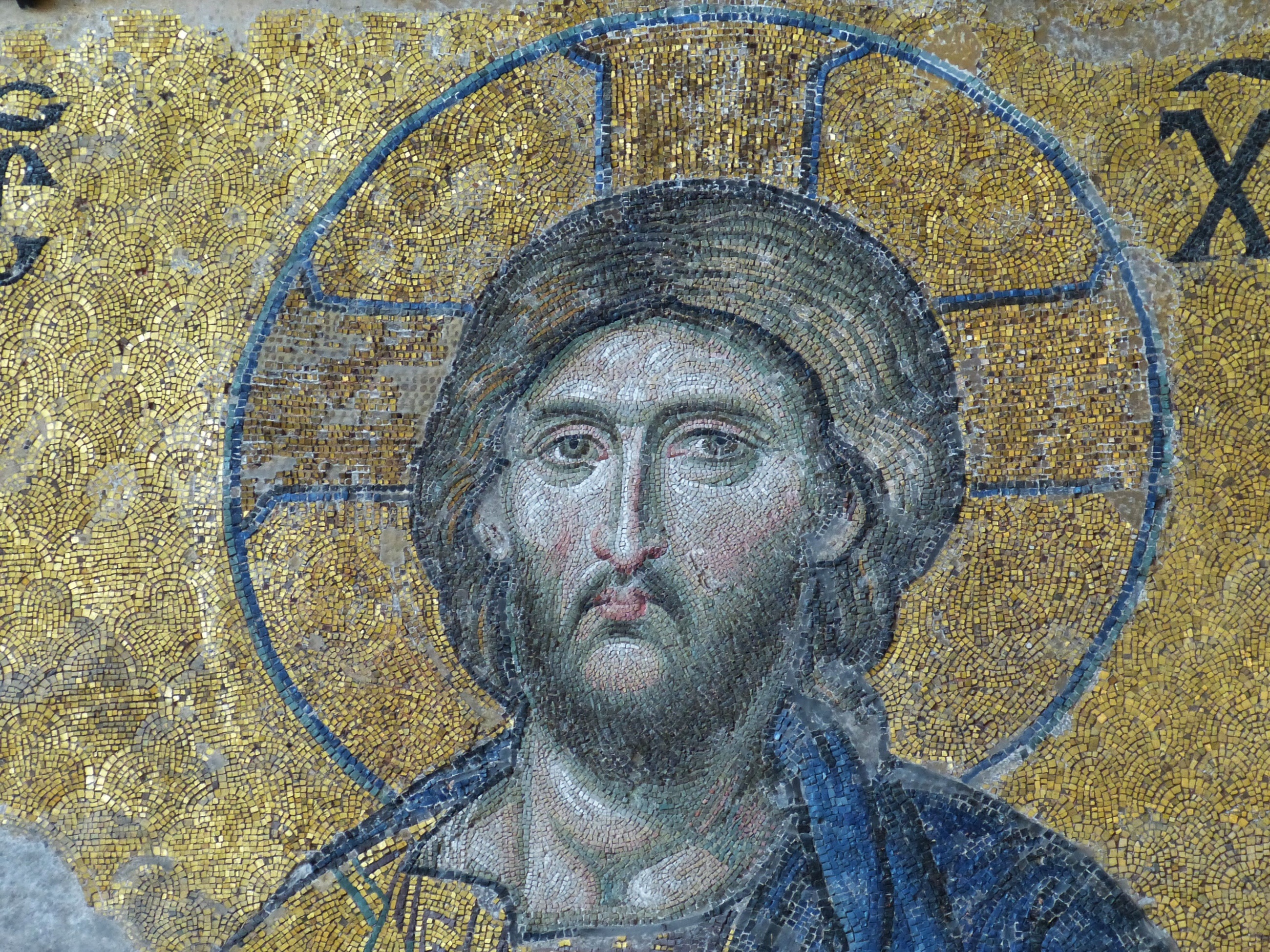
A second argument claims that while Jesus was an actual person, every descriptor of him is wrapped up in Christian confessions or beliefs about his divine status. Jesus as a fact of history is lost to history, but what is left is what matters: confessing Jesus as God’s Word. This argument is also misleading because it reduces the Christian gospels strictly to belief statements. Jesus as a figure of history does not matter. The act of reducing the gospels to confessions dismisses the impact the historical Jesus could have on the tradition of the church.
A third version of argument about whether Jesus is a fact of history hits closer to home. It is an amalgam of one and two above. The argument is that while there certainly was a factual Jesus of history, in the person of Jesus the historical and the mythical are too intertwined to separate successfully. So, we have certain facts about the historical Jesus, such as that he was from Nazareth, but there are not enough facts to form a credible biography of Jesus. This argument is like the middle ground, but it is still misleading because it assumes that “facts” in history are tied strictly to physical events that exclude the core sayings of individuals or movements.
The third argument hits home because it is the most common critique set against the Jesus Seminar. All three arguments, however, are used both in scholar and layperson circles. I think these claims both misunderstand the Jesus Seminar and misunderstand the subject of history.
History is not solely about separating myths from facts. Although critical tools from science are needed to verify historical events, the act of writing history crucially involves the imagination, or re-imagination, of historical figures, times, cultures, and languages. When I was a young high school student, I unfortunately did not have very good history teachers. I found the subject boring. When I started university, I had a fantastic history teacher who introduced me to R. G. Collingwood and the task of re-imagining other times, places, structures of thinking, and life experiences. Suddenly, I found the subject of history to be fascinating. I still regard myself mainly as a philosopher of history.
The Jesus Seminar was not composed of philosophers of history. With some exceptions, all the members were biblical scholars. Yet, they also had a sense of the philosophy of history, perhaps due to the forceful presence of Bob Funk and his thorough understanding of reality as a social construction. For this latter insight, which informed Funk’s understanding of parables as metaphors, he relied on the work of Peter Berger and Thomas Luckmann, The Social Construction of Reality.
The Jesus Seminar did not set out to find a factual Jesus or to produce a definitive biography of Jesus. They set out to identify the voiceprint of a historical figure. When we read from The Five Gospels or from individual writings of Jesus Seminar scholars, they were all keenly aware of how our contemporary interpretations of the world can interfere with our understanding of antiquity. Reconstructing antiquity requires the use of proven critical methods, but it is a work of art. The art involves hearing what is going on.
When it comes to the historical Jesus, the key is to hear him, not to figure out his date of birth or his favorite restaurant. It might be possible to ascertain some of these facts, but the point is to hear. Max Weber, in the early twentieth century, called this work of hearing, Verstehen, which is the German word for understanding. We cannot hear what is going on in history if we do not enter the understanding of the time we are studying.
The emphasis on hearing leads to the question about what Jesus really said. For ancient people, the gathering and the practicing of a lifestyle built around a school of wisdom led to a praxis of saying and doing. All the ancient Roman, Greek, and Jewish schools or movements were like this. They all had key collections of sayings, key leaders identified in their memories, and key practices of life.
There is merit to focusing on the factual question about what Jesus really did. The Jesus Seminar tried this question, too, but of course, the answer was practically “We haven’t got a clue” (see The Acts of Jesus). Since dealing with Jesus requires dealing with an oral culture and since ancient schools formed around sayings and wisdom figures, it is right first to attempt to hear Jesus as a voiceprint rather than as a fact.
The Jesus voiceprint is full of metaphors in the form of parables and aphorisms. Metaphors concern how we choose to think about life, but more importantly it’s not just thinking, it’s doing. Ancient schools had lots of interesting sayings, but the sayings translated into the identity of the school as a practice of its values. Even today, it is hard to think one way about life and practice another way of being in life. Ancient people, though, were still better than modern people at tying philosophy to ethics; in antiquity, a school of thought was also an ethics of being.
Metaphors in the voiceprint of Jesus open a window either to how Jesus thought about life or, at the very least, how the school to which he belonged thought. We can grasp the integrity of the life of Jesus from the metaphors that enliven his parables because the parables are ethics as much as thought experiments. We can also be challenged today to think about how those ancient metaphors can still come to life in our own way of being. This can happen when we understand that metaphors are not facts. They are calls to life thought about and acted out differently.
The genuine task of history is learning to hear the past, learning to notice the metaphors wrapped up in lessons, and learning to bring to life in our own time both lessons that should not be forgotten and lessons that should never be repeated. The focus on the voiceprint of Jesus was and remains a focus on historical wisdom, and in the end, history is about wisdom.
Get new scholarship, events, and blog posts delivered straight to your inbox.


Join the Conversation in the Westar Public Square
We’re updating how we engage with your thoughtful feedback! Blog post comments will no longer be hosted on our website. Instead, members can join the conversation in the Westar Public Square, where blog post links will be shared for deeper discussions.
Not a member yet? Join us to connect with a vibrant community exploring progressive religious scholarship! Become a Member Today