

The various Christian churches have struggled, raged, and resisted coming to terms with modern biblical studies. Any gain has been grudging and hard won. Jim Veitch’s Lloyd Geering Prophet or Heretic? is an engaging study of one moment in that ongoing battle: Geering’s 1967 heresy trial in New Zealand. Although Aotearoa New Zealand is a small and at times remote country, with its own special history, yet in microcosm it offers a picture of a universal situation.
All politics are local, and so too are church situations. The Church (universal) is an abstraction. What really exists are denominations and churches. And yet, there is a universal situation based on common traditions and histories.

At the end of the late medieval period, the various Christian churches found themselves divided but strong in their individual domains. After the Second Council of the Lateran (1139), the modern configuration of the Roman Catholic Church emerged centered on the papacy, claiming for the first time papal supremacy. In the various Catholic countries, its dominance was unquestioned. The Council of Trent (1545–1563) developed a strategy centered on the papacy to counter the Protestant Reformation. Likewise, the churches of the Reformation were mostly the established churches in their respective countries. In the medieval period, theology had been the queen of the disciplines, philosophy its handmaid. The Reformation did not question this. But the rise of science, knowledge independent of the church, did.
The breakout began in earnest with the trial of Galileo Galilei in 1633 for heresy. His arguments for a heliocentric model were judged to be against Scripture and tradition. Scripture takes no considered position on the question, but assumes the commonsense position of its day, earth is at the center. Galileo’s real argument was with Aristotle’s understanding of perfection. Moons around Jupiter proved Aristotle wrong. The Catholic Church was consolidating its power under the new understanding of papal infallibility and after the Reformation was in no mood to deal with a challenge from upstart astronomers and mathematicians, hardly among the queen of the sciences. In one fell swoop, the Catholic Church and Christianity lost the new emerging intelligentsia.
Between Thomas Aquinas and Galileo, thinking changed. The scholastics argued deductively. Truth was revealed and from that known truth other conclusions were deduced. The model is hierarchical: the truth is on high—in the mind of God. We see only pale reflections. Plato, Aristotle, Augustine, and Thomas Aquinas all operated with a version of this model. Galileo and his fellow scientific thinkers moved from observation, gathering of the evidence, to creating a hypothesis and testing it. Students of the Bible began to bring this same scientific and hypothetical thinking to the sacred scriptures which produced new and threatening conclusions.
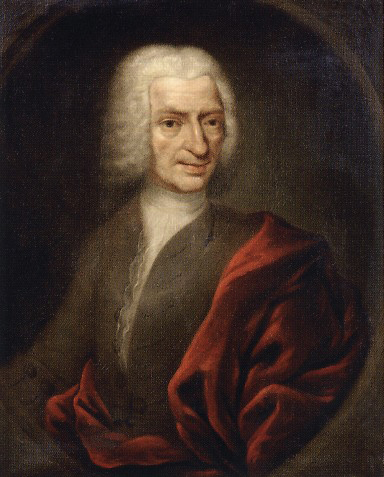
Critical research on the historical Jesus began with Hermann Samuel Reimarus (1694–1768). But the topic so alarmed him that only a few friends saw his manuscript during his lifetime. He carefully compared the four gospels and argued that since they were four independent accounts, as the tradition maintained, then someone was lying. He pointed to the apostles as the culprits. Having grown lazy in the entourage of Jesus, they invented the resurrection and that invention led to the differences.
Gotthold Ephaim Lessing published Reimarus’ work as Fragments by an Anonymous Writer (1774–1778). Joseph Bessler in A Scandalous Jesus (2013) has shown how Reimarus’ scholarship and Lessing’s publication of it threatened the Lutheran Church, the state government, and their entanglement.
Aside #1: Reimarus’ argument is foolproof. The only way around it is to argue the gospels are not independent eyewitness accounts. Lessing was the first one to propose oral tradition as a partial solution to the problem of lying. Seeing that the gospels are not eyewitness accounts but rather that a literary relation exists between three of them (the Synoptic Problem) is the next step in dealing with Reimarus’ predicament.

The next skirmish was Charles Darwin’s publication On the Origin of Species (1859). Darwin’s theory of evolution not only contradicted Genesis but denied human specialness. Humans are a part of the evolutionary tree, like any other species. Nothing unique about us.
Darwin’s book was a formidable challenge, but the situation was made worse by episcopal hubris and misjudgment. Several months after the publication of On the Origin of Species, the British Association, Britian’s premier scientific society, held its annual meeting at Oxford’s University Museum. It featured a discussion of Darwin’s new book. Samuel Wilberforce, Bishop of Oxford and a well-known speaker, challenged Thomas Henry Huxley, a proponent of Darwinism and nicknamed “Darwin’s Bulldog.” What exactly happened is unknown, but the gist of the meeting is clear and remembered as the Huxley-Wilberforce debate, although no actual debate occurred. Such are the oddities of numerous eyewitness accounts. Wilberforce reportedly asked Huxley through which grandparent did he claim descent from a monkey. Huxley shot back that he preferred a monkey for his ancestor to a man who used his great gifts to obscure the truth. Wilberforce was undone and so were the churches.
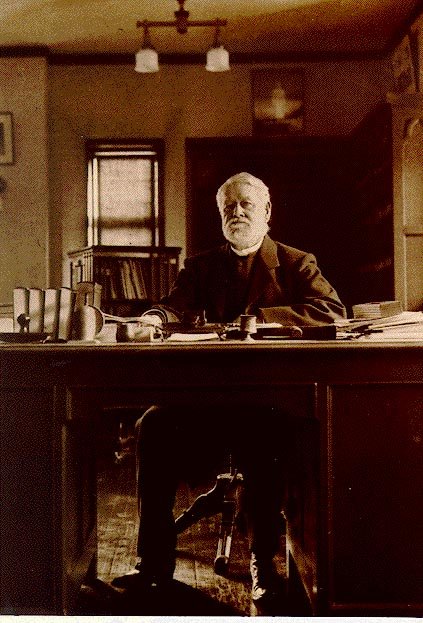
In America, Charles Augustus Briggs’s heresy trial sparked the fundamentalist reaction that continues to jolt American religion. After advanced studies in Germany where he studied higher criticism, he accepted a position at Union Theological Seminary (1891) in New York, which was affiliated with the Presbyterian Church. In his inaugural lecture entitled “The Authority of Scripture,” he noted that the Bible contains errors, Moses did not write the Pentateuch, and the Westminster Confession overvalued biblical inerrancy.
In 1892 he was tried by the New York Presbytery for heresy. He was charged with denying biblical inerrancy, undermining the authority of Scripture, and for teaching contrary to the Westminster Confession. He was acquitted. But the next year the General Assembly of the Presbyterian Church overturned the acquittal. Briggs afterward was ordained an episcopal priest and Union Theological Seminary severed its connection with the Presbyterian Church.
This confrontation was the first major one between biblical literalism and modern critical biblical scholarship. Out of this clash came fundamentalism and modernism, each driving American Protestantism in opposing directions. Fundamentalism is not traditional Christianity, as it often claims, but a reaction to modernism.
If the first great schism in 1054 was between the Greek Orthodox Church and the Roman Catholic Church, the second was the Reformation, and the third the fundamentalist reaction to modernism. It has fractured Christianity as much as the first two schisms.
Aside #2: If you studied Hebrew, you probably encountered the standard Biblical Hebrew Dictionary which appears with the abbreviation BDB for Brown, Driver, and Briggs. Briggs is Charles Augustus Briggs.
Up once again is the Catholic Church. Following the long and influential reign of Pius IX, the author of the Syllabus of Errors (1869) that declared as anathema that the pope should reconcile with modern progress, liberalism, and civilization, the reign of Leo XIII bought a cautious but significant opening to various aspects of modernity. This led a group of scholars in France, England, and Italy to explore various avenues in theology, church history, and biblical studies. The group identified as modernists because they sought to reconcile the ancient faith with modern thought. A leader of this group was Alfred Loisy, a Catholic priest who taught at the Catholic Institute of Paris. He had received his doctorate from the University of Paris and was current on the latest happenings in Germany.
When Adolf von Harnack published his bestseller Das Wesen des Christentums (1900, in English, What is Christianity [1902]), Loisy responded with his own bestseller Evangile et l'Eglise (1903, in English, The Gospel and Church [1903]). For Harnack, one of the great German historians, the historian separated the historical irrelevancies from the essence, the Geist, of a period, event, or person. He employed the analogy of separating the kernel from the husk. For him that kernel or essence of the Gospel was “God the Father and infinite value of the human soul.”
Loisy rejected this method. There was no essence. After peeling away the husk, nothing was left. Loisy preferred the analogy of seed and tree. His metaphor was evolution. Loisy traced historical development. He agreed with Harnack that the Kingdom of God stood at the center of Jesus’ teaching. But that for him was not an essence, but a seed. As his famous aphorism proclaims, “Jesus announced the Kingdom, and what came was the Church.” That was not for him a cynical remark, but a statement of historical development.
Loisy viewed himself as writing a historical apology for the development of the church and why it should change because it had always been changing. But the church was not buying it. Pope Pius X issued the encyclical Pascendi Dominici Gregis (1907) condemning modernism as “the synthesis of all heresies,” and the next year, Loisy was excommunicated. He was named a professor at the Collège de France, the position formerly held by Ernest Renan.
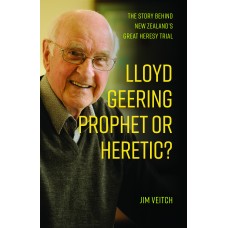
Lloyd Geering’s story in outline is remarkably similar, but varying in details, to those we have reviewed. The plot is the same, the story changes. His heresy trial was one of the most important events in New Zealand religious history and caught the attention of the whole nation.
As an undergraduate at the University of Otago, New Zealand, Geering majored in mathematics and physics, staying on for masters. This scientific training influenced his intellectual outlook for the rest of his life. He received his theological training at Knox Theological Hall at the same university and was ordained a Presbyterian minister. He then pursued a PhD in Old Testament, again at the University of Otago. Although his education was at one university, that university was not provincial but up to date with the latest critical scholarship. Geering then took up a position as professor of the Old Testament at Knox Theological Hall in 1960, where students for the Presbyterian ministry were trained. He eventually became principal of Knox Theological Hall in 1963. This was an important position in Presbyterian circles in New Zealand.
In 1966 in a series of articles in Outlook, the Presbyterian Church’s magazine, Geering suggested that Jesus had not risen physically from the dead; to understand the resurrection in this way was to misread the gospels. He also argued that humans do not have an immortal soul. Finally, he maintained that to read the Bible literally was wrong; it should be read in its historical context.
He was charged by a lay member and a minister with doctrinal error and “disturbing the peace and unity of the church.” The Presbyterian Church’s General Assembly debated the charges. The interest was so high that the proceedings were televised, fostering much discussion within and without the church. After extensive debate, the Assembly declared that no doctrinal error had been proven. This is too simple a summary. Veitch has the details. The Assembly took no action against Geering.
But the televised trial was not the end. The next year, concerns about Geering were raised again in the General Assembly. Here the story becomes almost too labyrinthine to follow, although Veitch does his best to untangle the threads. Geering acted first. He accepted a position at Victoria University of Wellington, resigned from his position with the Knox Theological Hall, but remained a minister of the Presbyterian Church of New Zealand. He remained an important public intellectual in New Zealand and a force in the Presbyterian Church of New Zealand.
As with the Briggs case in the United States, following Geering’s trial, the Presbyterians in New Zealand began to split into literalist and progressive camps. The breech has not been healed.
Geering’s story is of interest not only to those in New Zealand, but to all those interested in the ongoing efforts of Christians to come to terms with modern ways of thinking. There is no evidence that the conflict is abating. Reactionary Christianity, both in its fundamentalist and Catholic forms, is at the heart of the MAGA movement, although Trump is neither. Geering’s story indicates that a viable form Christianity can emerge from an engagement with modern critical thought. He remains a Presbyterian minister in good standing.
The real tension is between the future and the past. Where does the truth lie? Is theology settled or yet to be discovered? Do we stand in a tradition, frozen in place? Such a place is ahistorical. The church and churches, Christianity and Christianities have always been changing, shifting, evolving, renewing themselves. History demonstrates it over and over again, despite dogma’s claim to be unchanging. Nothing is unchanging. Fundamentalism, conservatism, and traditionalism are modern positions, reactionary movements against modern scientific ways of thinking. They are not ancient positions as they claim. The only way to live in the past is to destroy the future.
Veitch’s book is important because it preserves the details for future generations to examine. Veitch has scrutinized this episode in granular detail like no previous similar episode has been examined. He knows the principals, has their archives or access to them. He understands the context in Aotearoa New Zealand, in the Presbyterian Church in Aotearoa New Zealand. He lays out the theological ferment of the 1960s. He makes available all the details. He tells the story in a thorough way in exhaustive detail. He has a point of view, forcibly presented. But, and this is an important “but,” he has gathered and presented the evidence in such a way that future generations of scholars will be able to re-examine the evidence in their own ways. A marvelous accomplishment!
As to the title, Heretic or Prophet?, is there a difference?
Jim, congratulations on an important book.
Lloyd, Happy Birthday, good and faithful servant.
Get new scholarship, events, and blog posts delivered straight to your inbox.


Join the Conversation in the Westar Public Square
We’re updating how we engage with your thoughtful feedback! Blog post comments will no longer be hosted on our website. Instead, members can join the conversation in the Westar Public Square, where blog post links will be shared for deeper discussions.
Not a member yet? Join us to connect with a vibrant community exploring progressive religious scholarship! Become a Member Today